 EN
EN

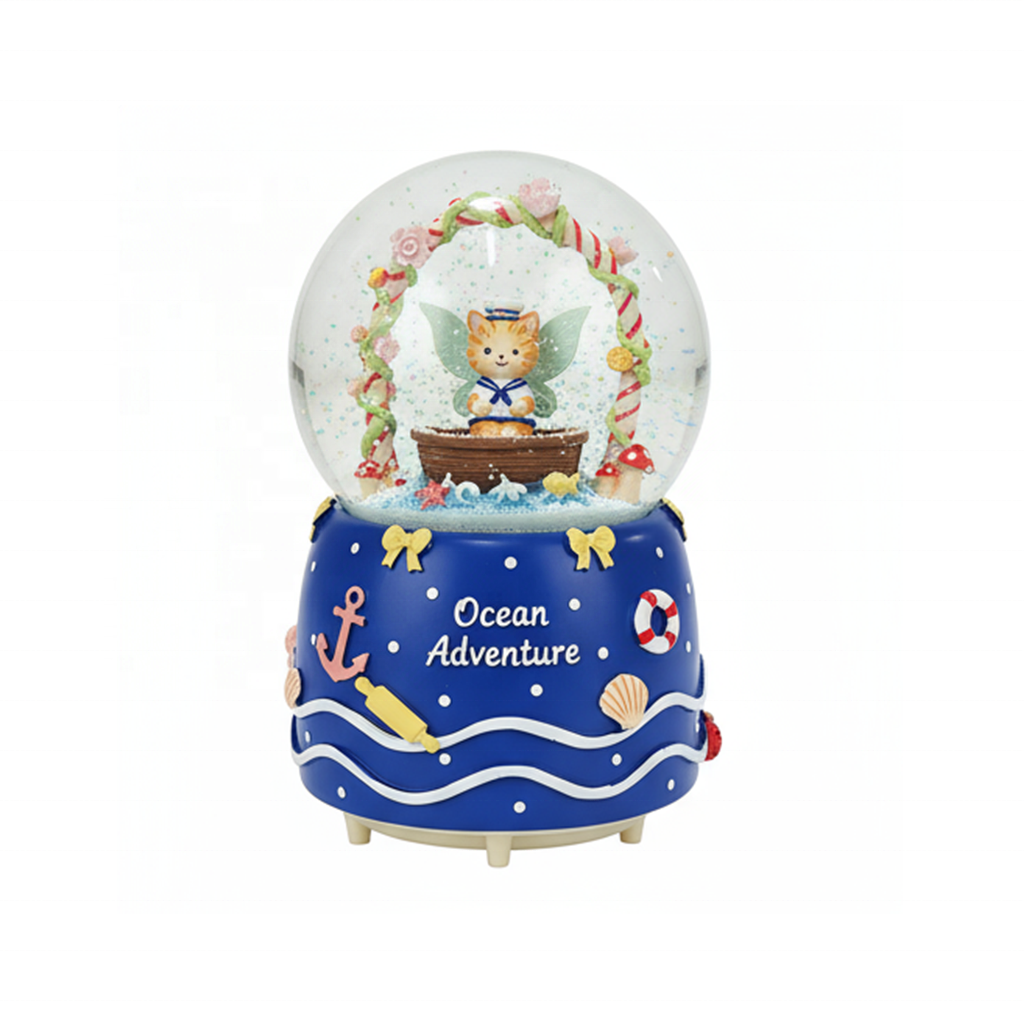
Glass Material Quality: Clarity, Safety, and Thermal Performance
Borosilicate vs. Soda-Lime Glass: Optical Clarity and Lead-Free Compliance (ASTM F963)
The best quality glass snowballs are made from borosilicate rather than regular soda-lime glass. Why? Because borosilicate offers much better optical clarity, stays stable when temperatures change, and meets the ASTM F963 safety standards for kids' toys in the US. The material has a really low thermal expansion rate around 3.3 x 10^-6 per degree Celsius, which means it doesn't warp or distort even when there are temperature fluctuations. This keeps those intricate snowflake designs looking sharp and accurate. Tests by independent labs show that borosilicate lets through about 92% of visible light, which is actually 7% more than what soda-lime glass can manage. That makes a real difference in how bright and vibrant the scenes appear. Getting this level of clarity isn't easy though. Manufacturers need to use precise techniques like laser cutting for components and carefully control the annealing process to get rid of any internal stresses in the glass.
Thermal Shock Resistance and Edge Polish as Markers of Precision Glassblowing
Thermal resilience is a definitive benchmark of quality. Borosilicate withstands abrupt temperature swings of up to 150°C—essential when moving from a warm room to a cold window—without cracking. This capability stems directly from its silica-boron composition, which reduces expansion and increases fracture resistance compared to soda-lime glass:
| Property | Borosilicate | Soda-Lime |
|---|---|---|
| Thermal Shock Limit | ±150°C | ±50°C |
| Expansion Coefficient | 3.3 × 10^-6/°C | 8 × 10^-6/°C |
| Fracture Resistance | 4× higher | Baseline |
Equally telling is the finish: flame-polished edges signal expert craftsmanship. Smooth, rounded rims eliminate micro-crack initiation points and prevent accidental cuts. This finish is achieved through diamond grinding followed by precise 700°C fire-polishing—a non-negotiable step in premium snowball production.
Structural Integrity: Sealing, Liquid Stability, and Impact Resistance
A glass snowball’s longevity depends on three interlocking elements: hermetic sealing, stable liquid formulation, and mechanical robustness. Compromise in any one undermines all.
Hermetic Seal Verification and Micro-Leak Detection for Long-Term Clarity
Most of the time, cloudy spots and stains inside containers come down to failed seals. These faulty seals let things like evaporation happen, allow air to get in, and create conditions where microbes can grow. Checking for problems isn't just about looking at something closely. There's pressurized testing following those ASTM F963 standards that actually finds tiny leaks we wouldn't notice otherwise. Helium detectors are pretty amazing too, picking up on issues as small as 1 times 10 to the negative sixth power mbar liters per second something our eyes definitely miss. Putting components into colored solutions helps spot really fine cracks where the glass meets the base. Proper sealing work means the contents stay fresh and clear without degradation for many years, which is why it matters so much in long term storage applications.
Glycerin-Water Ratio (70:30) and Its Role in Snow Fall Rate and Viscosity Consistency
The 70:30 glycerin-to-water ratio is the industry-validated standard for authentic snow behavior. At this balance, viscosity measures 120–150 cP on a Brookfield viscometer, yielding a natural, unhurried descent of 3–5 seconds per flake. Deviations degrade performance predictably:
- >70% glycerin: Excessive drag slows descent to ≥8 seconds, creating a sluggish, unnatural effect
- <65% glycerin: Reduced resistance causes flakes to sink in <2 seconds—more like rain than snow
- Inconsistent ratios: Promote clumping or stagnant “dead zones” where flakes fail to move
This ratio also ensures thermal resilience between −5°C and 50°C without phase separation or crystallization. Refractive index testing (nD = 1.380 ± 0.005 at 20°C) provides an accurate, non-destructive method to verify consistency across production batches.
Visual & Functional Performance: Snow Behavior, Figurine Detail, and Base Stability
Biodegradable Glitter vs. Polyethylene Flakes: Realistic Fall Rate and Environmental Safety
Cellulose glitter made from plants actually beats regular plastic glitter when it comes to looking real and being better for the planet. The way these tiny pieces are shaped irregularly and their lighter weight means they fall slowly through the air at around 2 to 4 centimeters per second, which feels much like watching actual snowflakes drift down. Regular plastic glitter stays around forever as harmful microplastics, but those cellulose bits break down completely in water after just a few months. People who really care about quality decorations and folks worried about the environment tend to prefer this option because it looks authentic while also taking care of our oceans and lakes. More and more high end decorators are starting to see sustainability as part of what makes something truly valuable.
Hand-Painted Figurines and Interior Scene Complexity: Identifying Premium-Tier Glass Snowball Craftsmanship
The real magic happens when looking closely at the small stuff. Hand painted resin figurines with brushstrokes so fine they measure around 0.2 to 0.5 millimeters let artists create faces full of expression, fabrics that look like they have multiple layers, and shadows that give depth in ways no mold or digital printer can match. Scenes built across several levels tell stories through space. Think of a little cottage in front with trees shaped by hand on either side, while mountains fade into the background like distant memories. These pieces use special ceramic paints fired in kilns which means the colors stay vibrant for years without fading away. The more intricate the scene, the better it holds its value over time, making these works not just beautiful but worth keeping for collectors who appreciate both artistry and lasting quality.
Base Weight Distribution (≥65% of Total Mass) for Optimal Stability and Display Safety
Stability isn’t aesthetic—it’s engineered. A base comprising at least 65% of total mass lowers the center of gravity sufficiently to resist tipping, even on uneven surfaces or in high-traffic spaces. Data from display-safety studies show clear thresholds:
| Mass Distribution | Stability Outcome | Risk Factor Reduction |
|---|---|---|
| <60% base weight | High tip risk (>35° angle) | 4× more accidents |
| 65–70% base weight | Optimal stability (<15° angle) | 92% tip prevention |
| >75% base weight | Diminished aesthetic appeal | N/A |
Paired with integrated non-slip rubber padding, this weight distribution safeguards against falls while preserving clean, balanced proportions.
Durability Red Flags: Yellowing, Cloudiness, and Degradation Over Time
The way glass snowballs degrade isn't really random at all. There are specific paths these problems take depending on what kind of environment they're exposed to. When UV rays hit them, something starts happening inside those glycerin solutions. The result? A slow yellowing process that makes the figurines look less vibrant and basically ruins the view of whatever scene was meant to be seen inside. Then there's humidity to worry about too. Those constant changes in moisture levels put pressure on the seals around the glass, letting water sneak in and make everything cloudy. And don't get me started on temperature changes. Every time it gets hot then cold again, the connection between glass and resin gets strained. Tiny cracks form, scattering light everywhere and creating this annoying permanent haze that just won't go away no matter how carefully someone tries to preserve their collection.
| Degradation Sign | Primary Trigger | Long-Term Consequence |
|---|---|---|
| Yellowing | UV exposure | Color distortion of figurines/scenes |
| Cloudiness | Humidity shifts | Loss of visual clarity in suspension |
| Edge Haze | Thermal cycling | Structural weakening of glass |
Better quality displays avoid these problems thanks to special glycerin mixtures that resist UV damage plus seals that have been put through extensive testing. These models can keep their clarity for many years even when displayed indoors normally. On the flip side, cheaper alternatives tend to start showing signs of trouble pretty quickly, usually turning yellowish or cloudy somewhere between one and a half years after installation. When there's constant fogging right where the seal meets the glass or crystals forming inside the liquid itself, that means serious damage has occurred. At this point, replacing the unit becomes necessary just to maintain proper visual presentation without distracting flaws.
FAQs About Glass Material Quality
What makes borosilicate glass better than soda-lime glass for snowballs?
Borosilicate glass offers superior optical clarity, stability under temperature fluctuations, and meets ASTM F963 safety standards. Its low thermal expansion rate ensures it doesn't distort, keeping intricate designs clear.
How does the glycerin-to-water ratio affect the snow fall rate?
The 70:30 glycerin-to-water ratio ensures an optimal snow fall rate by maintaining a balance in viscosity. Deviations can lead to either sluggish or rapid falls, altering the natural appearance of the snow.
Why is stability important in glass snowballs?
Stability prevents tipping, ensuring that the display remains intact. A base weight of at least 65% of total mass lowers the center of gravity, reducing the risk of toppling over, especially in high-traffic areas.
How can I prevent my glass snowball from yellowing or getting cloudy?
Choose high-quality models that use special glycerin mixtures resistant to UV light and have well-tested seals. Avoid exposing the snowball to direct sunlight and drastic humidity changes to maintain clarity.
Table of Contents
- Glass Material Quality: Clarity, Safety, and Thermal Performance
- Structural Integrity: Sealing, Liquid Stability, and Impact Resistance
- Visual & Functional Performance: Snow Behavior, Figurine Detail, and Base Stability
- Durability Red Flags: Yellowing, Cloudiness, and Degradation Over Time
- FAQs About Glass Material Quality